Are Dry Herb Vaporizers Safe? Vapor vs Smoke Compared
Quick Answer
Are dry herb vaporizers safe? Compare vapor vs smoke from combustion, review scientific evidence on harm reduction, learn safe temperature ranges, materials to look for in quality devices, myths vs facts, and FAQ.
Are Dry Herb Vaporizers Safe? What You Need to Know
"Is a vaporizer safe?" is the most common question people ask before buying a dry herb vaporizer — and it is a good one. Before investing in any device related to your health, you should understand the evidence and make an informed decision.
This article compares vapor with smoke from combustion, references published research, explains safe temperature ranges, examines the materials used in quality devices, and separates myths from facts.
Disclaimer: This article is for educational purposes only. It is not medical advice. If you have health concerns, consult a healthcare professional.
---
Vapor vs Smoke — The Fundamental Difference
What Is Combustion?
When dried herb is ignited, temperatures soar to 600-900 degrees Celsius. At these temperatures, organic matter undergoes hundreds of chemical reactions, creating numerous new compounds — many of them harmful.
What combustion produces:
- Tar — a thick, sticky substance that coats the respiratory tract
- Carbon monoxide (CO) — a toxic gas that displaces oxygen in the blood
- PAH (Polycyclic Aromatic Hydrocarbons) — known carcinogens
- Benzene, acetaldehyde, and hundreds of other toxicants
- Fine particulate matter that penetrates deep into the lungs
What Is Vaporization?
A dry herb vaporizer heats material to 160-230 degrees Celsius — enough to release active compounds as vapor but well below the point of combustion.
What vaporization produces:
- The desired active compounds (cannabinoids, terpenes)
- A small amount of water vapor
- No tar, no CO, no soot
- A significant reduction in combustion-related toxicants
Side-by-Side Comparison
| Factor | Combustion (Smoke) | Vaporization (Vapor) |
|---|---|---|
| Temperature | 600-900 C | 160-230 C |
| Tar | High levels present | Not present |
| Carbon Monoxide | Present | Absent or negligible |
| Carcinogens (PAH) | Present | Significantly reduced |
| Odor | Strong, lingers on clothes and in rooms | Mild, dissipates quickly |
| Flavor | Burnt, harsh | Clean, full herb flavor |
| Extraction Efficiency | Low (active compounds destroyed by fire) | High (compounds vaporize intact) |
What Does the Scientific Evidence Say?
Multiple peer-reviewed studies have compared smoking and vaporizing. Here is a summary of their findings:
Key Findings from Research
1. Reduced combustion toxicants — Comparative studies found that vapor from dry herb vaporizers contains significantly fewer harmful compounds than smoke, particularly tar, carbon monoxide, and PAH.
2. Respiratory symptoms — Some studies reported that users who switched from smoking to vaporizing experienced improvements in respiratory symptoms such as coughing, phlegm production, and chest tightness.
3. Extraction efficiency — Vaporizers extract active compounds more efficiently because fire does not destroy them during the process.
4. Not zero risk — While substantially better than combustion, inhaling any substance into the lungs carries inherent risk. No study claims vaporizing is completely safe.
Important context: These findings are compelling evidence for harm reduction, not harm elimination. Vaporizing is better than smoking, but "better" does not mean "safe."
---
Safe Temperature Ranges
Recommended Range: 160-220 C
| Range | Safety Level | Notes |
|---|---|---|
| 160-180 C | Safest | Light vapor, fewer active compounds extracted |
| 180-200 C | Safe | Good balance — recommended for most users |
| 200-220 C | Acceptable | Dense vapor, still within safe parameters |
| 220-230 C | Caution | Approaching combustion, toxicant levels may increase |
| 230+ C | Avoid | Combustion may begin, negating vaporizer benefits |
---
Safe Materials — What to Look for in a Quality Device
The materials used in a vaporizer's construction directly affect safety. Quality devices use the following:
Materials to Look For
| Material | Used In | Why It Is Safe |
|---|---|---|
| Medical-grade ceramic | Oven, air path | Does not release chemicals when heated |
| 304/316 stainless steel | Oven, screens, air path | Food-grade, heat-resistant, corrosion-proof |
| Borosilicate glass | Mouthpiece, vapor path | Inert, easy to clean |
| Food-grade silicone | O-rings, seals | High heat resistance, no off-gassing |
Materials to Avoid
- Cheap plastic near heat sources — may release toxic fumes
- Unspecified metals — unknown contamination risk
- Adhesives or paint in the airpath — should never contact vapor
Devices with High Material Standards
| Device | Oven Material | Airpath Material | Standard |
|---|---|---|---|
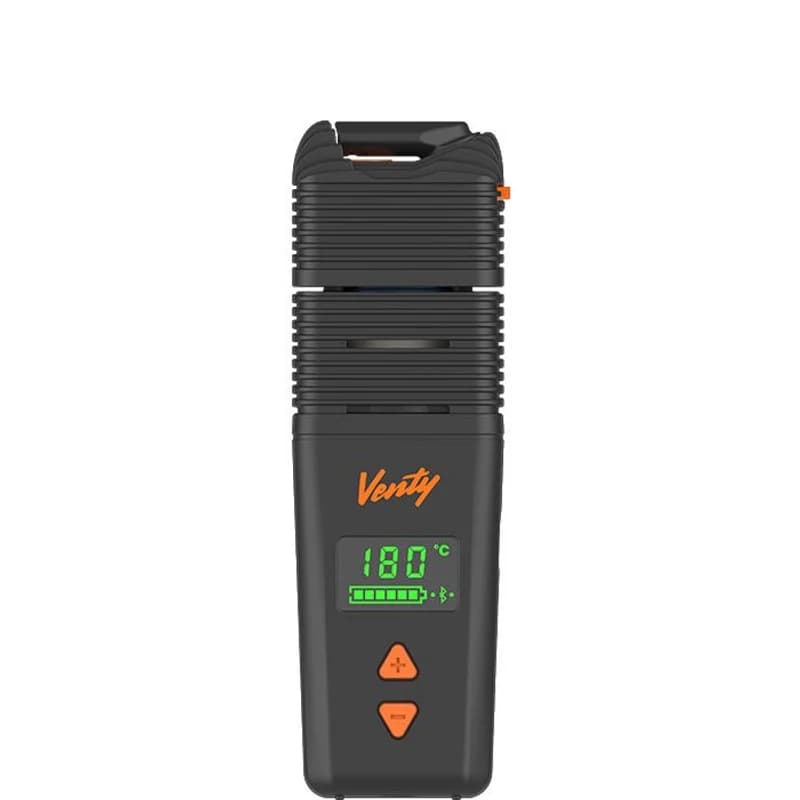
| S&B Venty | Ceramic + Aluminum | Medical-grade plastic | Made in Germany, ISO 13485 |
| S&B Mighty+ | Ceramic + Aluminum | Medical-grade plastic | Made in Germany, ISO 13485 |
| XMAX V3 Pro | Ceramic | Stainless steel + Food-grade silicone | CE certified |
| XMAX V4 Pro | Ceramic | Stainless steel + Food-grade silicone | CE certified |
---
How to Choose a Safe Vaporizer
1. Buy From an Authorized Dealer
Authentic products pass factory quality control and carry verifiable serial numbers. Counterfeit or clone devices may use substandard materials that release harmful substances when heated.
2. Avoid Suspiciously Low Prices
A vaporizer priced far below its normal retail cost is likely counterfeit or uses inferior materials.
3. Check Material Specifications
Quality devices clearly state their materials: "Medical-Grade Ceramic Oven," "Stainless Steel Airpath." If a device does not disclose its materials, treat it with suspicion.
4. Look for Certifications
Trustworthy standards include CE, FCC, RoHS, and ISO 13485 (for medical-grade manufacturing).
---
Myths vs Facts
| Myth | Fact |
|---|---|
| Vaporizers are 100% safe | They reduce harm compared to combustion, but no inhalation method is entirely risk-free |
| Vapor contains no chemicals | Vapor contains active compounds and other substances, but lacks combustion toxicants like tar and CO |
| Vaporizers are the same as e-cigarettes | Completely different. Dry herb vaporizers use dried plant material. E-cigarettes use nicotine-containing e-liquid with flavorings |
| Cheap and expensive vaporizers produce the same vapor | Materials differ. Cheap devices may use substandard plastics or metals near heat sources that can off-gas harmful substances |
| Any temperature setting is fine | Temperatures above 230 C can cause combustion, eliminating all benefits of vaporizing |
Comparison With Other Methods
| Method | Temperature | Tar | CO | Carcinogens | Odor |
|---|---|---|---|---|---|
| Combustion (smoking) | 600-900 C | High | High | High | Very strong |
| Dry herb vaporizer | 160-230 C | None | None/negligible | Significantly reduced | Mild |
| E-cigarette | 200-300 C | None | None | Some (from e-liquid compounds) | Varies by liquid |
Frequently Asked Questions (FAQ)
1. Is vaporizing genuinely safer than smoking?
Based on available research evidence, vaporizing significantly reduces exposure to combustion-related toxicants compared to smoking. However, "safer" is a relative term. No method of inhaling any substance is completely safe.
2. What temperature is considered safe?
The recommended range is 160-220 C. Do not exceed 230 C, as combustion may begin at that point. For maximum harm reduction, stay within 180-200 C.
3. Are vaporizers as dangerous as e-cigarettes?
No, they are fundamentally different. Dry herb vaporizers use dried plant material. E-cigarettes use e-liquid containing nicotine and synthetic flavorings — the substances that have been linked to health concerns with e-cigarettes. The two devices operate on entirely different principles.
4. How do I know if a vaporizer is authentic?
Verify the serial number on the manufacturer's website. Purchase from authorized dealers such as GoodGuy, which is an official dealer for Storz & Bickel, XMAX, and DynaVap.
5. Which vaporizer should I choose if safety is my top priority?
Choose a device from a brand that discloses its materials, holds manufacturing certifications, and has a long track record. Storz & Bickel sets the industry standard, manufacturing in Germany to the same ISO 13485 standard used for medical devices.
- Storz & Bickel Venty — Premium portable vaporizer
- Storz & Bickel Mighty+ — The most popular portable vaporizer
---
Conclusion
A dry herb vaporizer is not a 100% safe device. But compared to combustion, the scientific evidence indicates that it significantly reduces exposure to harmful compounds — no tar, no carbon monoxide, no soot, and substantially fewer toxicants.
The key principles for safer use:
- Keep temperature below 220 C
- Choose devices made with food-grade or medical-grade materials
- Buy authentic products from authorized dealers
- Maintain your device and keep it clean
Choose authentic vaporizers from GoodGuy — an authorized dealer for leading brands, with quality guaranteed on every product.
Shop Authentic Vaporizers at GoodGuy
---
Not Sure Which Vaporizer Is Right for You?
Take our 5-question product quiz to get a personalized recommendation, or use the product comparison tool to compare specs side-by-side.
Tags
People Also Ask
RECOMMENDED
Popular Herbal Vaporizers
Additional Resources
- Planet of the Vapes (POTV) — Global vaporizer reviews and rankings
- Vaporizer Wizard — In-depth vaporizer comparison guides and reviews
- 420 VapeZone — Video reviews and vaporizer usage techniques
Related Articles
LimeLight Frolic Review Roundup — The 9.4/10 Thermal Extractor Worth the Hype?
Every major review of the LimeLight Frolic compiled — POTV gave it 9.4/10, 420VapeZone named it Best New Portable 2026, but VapeGuy scored just 3.4/5. Real pros, cons, and comparisons from trusted sources.
LimeLight Frolic รีวิวรวม — Thermal Extractor ที่ได้ 9.4/10 จาก POTV ดีจริงไหม?
รวมรีวิว LimeLight Frolic จากทุกเว็บดัง — POTV ให้ 9.4/10, 420VapeZone ยก Best New Portable 2026, Troy & Jerry อันดับ 4 แต่ VapeGuy ให้แค่ 3.4/5 ทำไม? รวบรวมข้อดีข้อเสียจากผู้ใช้จริงทั่วโลก